Welp, it’s February.
January 2026 was approximately 794 days long, and somehow, it’s now officially too late to say “Happy New Year” to anyone.
But, does that make it too late to file my predictions for 2026?
No.
Want to know why I think it’s not too late? Because if all our apps can ship their “wrapped” year end reports in the first week of December, then I can publish my predictions for the year almost halfway into Q1.
(Please don’t check my math on that.)
For those of you keeping score:
(Please don’t keep score.)
Here are six predictions for 2026, covering the overlapping territory of clean energy, electricity, sustainability, and AI.
ONE
There won’t be any major power outages due to capacity strains on the electrical grid, aside from those caused by natural disasters.
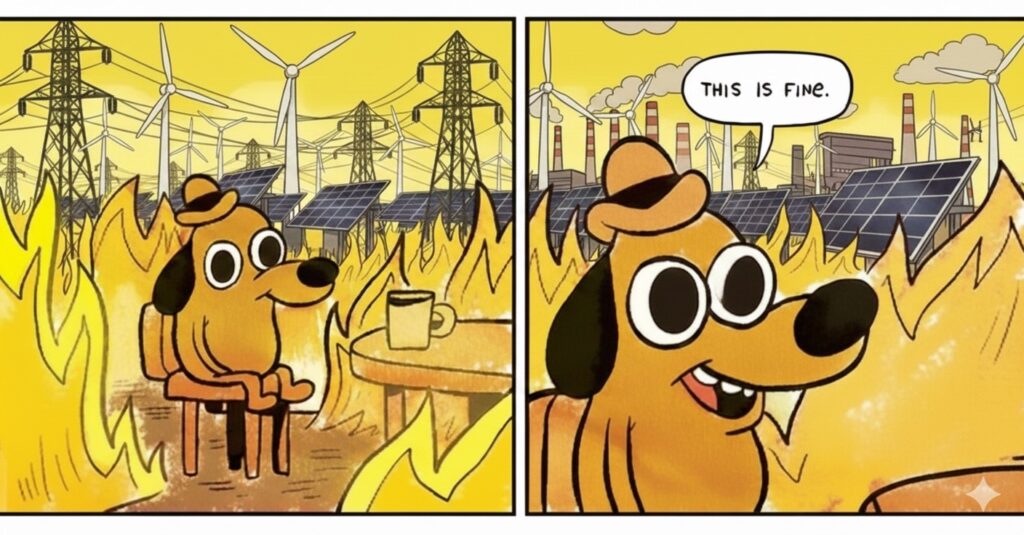
If you’ve seen a red-orange-yellow map around in recent weeks warning of blackout risk, I think we’re all looking at a somewhat alarmist view filtered through the lens of the high end of energy demand predictions, which, yes, follow the steep upward trajectory of data center electricity demand — much of which is strictly theoretical, in that the demand in the queue will not all materialize in reality.
What will keep happening, more hopefully, is the continued “electrification” of automobiles and HVAC systems. More EVs and heat pumps everywhere is good; if they’re powered by coal and natural gas, that’s a suboptimal outcome.
If we think of electrification as a secular change, happening at various rates in different parts of the U.S. and around the world, it’s easier to see that as a long-running process of change that requires a long-term investment in clean energy to support it. The AI data center boom is different. Is it temporary? I’m starting to develop a hypothesis…
TWO
The AI bubble is going to show signs of weakness this year, but don’t expect any major collapses yet.
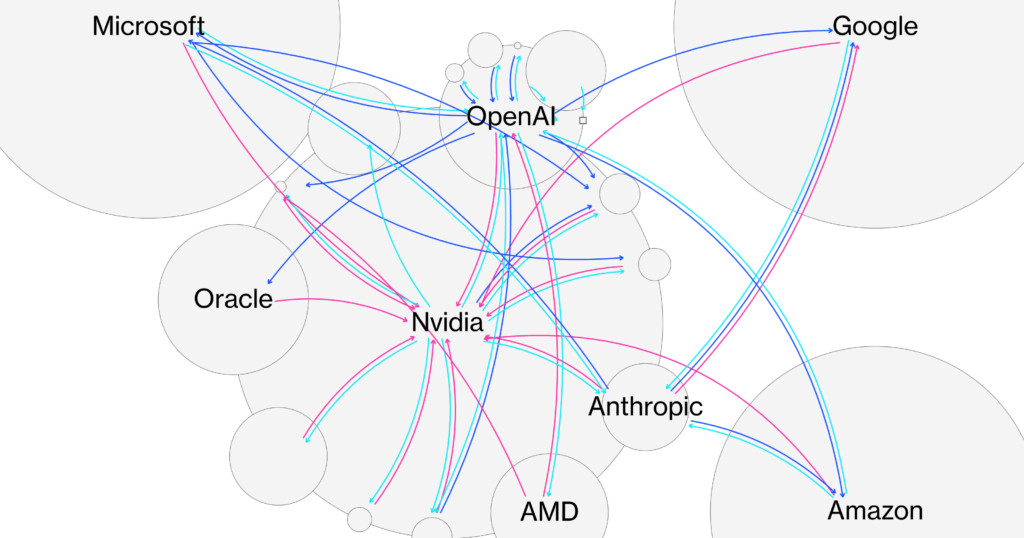
As has been well documented, the biggest companies investing the most gargantuan sums of money in AI are mostly investing in each other, creating a lot of circular risk.
That doesn’t mean AI is worthless, or all bad, or all good.
If you’ve heard me talk about AI anytime during the past year, you know I’m more interested in data transparency around its energy, water, and carbon costs than I am in any sort of absolutist or deterministic view.
I think we’re going to see two important things happen around AI and energy this year:
One is that the companies spending time and effort to make AI more energy and water efficient are going to see real benefits in the market — not because anyone outside the sustainability space cares if it’s more efficient, but because it will help them get to market faster, get new data centers powered faster, lower costs, and eventually, make AI profitable, perhaps. And yes, the opposite is also true: Companies that throw retrofitted jet engines (and other more inefficient energy sources) at the problem behind the meter are going to spend more money, add more overhead, and generally have a bad time.
The second thing I think we’ll see in the AI space this year is more about what we won’t see: AGI isn’t coming, and the largest first movers who have been chasing it at great expense are going to chase it off a cliff. I don’t think this is the year they’ll stop chasing it, but the negative effect on their other products is going to feel more and more salient.
THREE
Batteries, batteries, batteries, batteries.
(And yes, other forms of energy storage.) Bring me all your hot rocks.
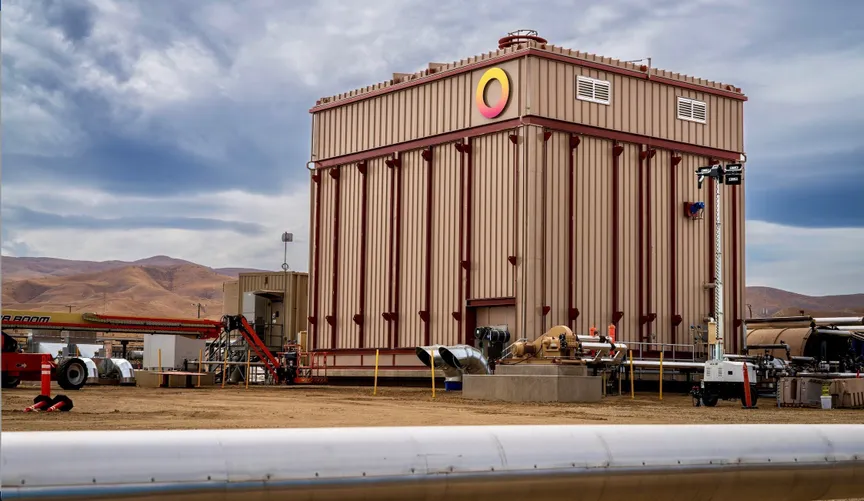
If 2025 was the year of irrationally sorting renewable energy technologies into unhappy buckets, batteries somehow survived, with key US federal incentives still in place, and lots of obvious need, demand, and markets for them, along with success stories from places like California, Texas, and South Australia, among others.
Those three places are apples, oranges, and kiwis when it comes to the markets, regulations, programs, and utilities involved, but the common theme is that pairing renewables with batteries solves for a large percentage of any calendar year’s peak load days.
I’m more excited about batteries than just about any other technology, and there’s an active and growing ecosystem of software companies buzzing around in those different markets and programs. There’s a huge need for standardization, and always the XKCDian risk of competing standards spawning a 14th standard, but we’ll get there. And if we don’t? It’s still a great outcome if homeowners leapfrog some of the potential centralization and monitoring provided by the grid and utilities, opting for solutions like balcony solar and plug-in home batteries.
As always, the most likely outcome is mixed, especially here in the U.S. where it’s just a really big country with too many municipalities to count, and certainly too many to wrangle into changing policy quick enough for our actions to have their maximum possible impact.
I’ve barely scratched the surface here. I want to see 100MWh batteries on every new data center campus instead of natural gas turbines, and smaller batteries replacing diesel generator backups; I want to see much, much smarter negotiating with providers of “critical” minerals for the batteries that should eventually replace fossil fuel peaker plants; and on every grid in North America within the next 24-36 months, I want to see batteries charged with clean energy during daytime wind and solar peaks, then discharged after sunset during evening peaks. This is a missing link in our energy ecosystem with a huge amount of potential. (All puns are intended.)
FOUR
Hyperscalers aren’t going to wait for all of these new energy technologies to build new data centers, but the best of them will continue to invest in clean energy.
What’s already changing, with the GHG Protocol Scope 2 revisions pushing the largest emitters to put new clean energy on the grid where they use it, to be available when they use it. This is a meaningful change that won’t go into full effect for a while, but if you’re watching, it’s already in play. (Ask me about the Scope 2 changes if you see me in person. I am fun at parties.)
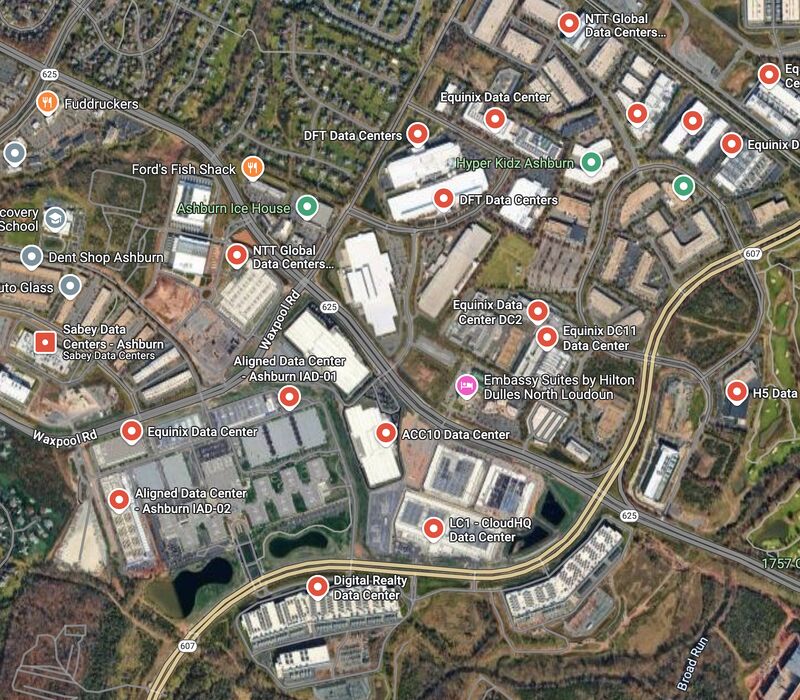
I would always rather see these companies reduce their emissions, rather than throwing more energy at the problem, but where I live in Northern Virginia, literally in the middle of the largest current concentration of computing power in the world, it would be really great if we could lower the overall emissions of the PJM grid by adding more solar, wind, and batteries. The whole region will benefit from the clean energy investments the largest companies make, no matter who claims the credit for putting them on the grid.
FIVE
Speaking of my neighborhood, and yours, we shouldn’t expect local communities to stop fighting new data centers, high voltage lines, and substations anytime soon.
And that’s fine. But both the data center and clean energy industries could improve their storytelling and community engagement approaches to turn more NIMBYs into YIMBYs.
What I would like to see — and what would get me to show up to public meetings in support — are plans to require data centers to bring their own new clean energy. The words “new” and “clean” in that sentence are both of critical importance. Investing somewhere on the same grid is helpful; investing inside the state or utility in play is better. Investing in new clean energy that is available when you use electricity on the same grid is best of all.
Conveniently for us in Virginia, we have a new governor and matching legislative houses that are already moving policy with ideas like this somewhat baked in. That said, I continue to think the owners and tenants of data centers here in Loudoun County could do a much better job of storytelling on the topic of how much of our annual budget comes from the property taxes they pay.
There are negative narratives about data center development that don’t always apply where I live (again, this is the current highest concentration of data centers in the world), and there are probably good examples of policy that could be exported to other places wrestling to balance economic benefits with community impact.
And then there are the extremes — the actually illegal and irresponsible moves by at least one company last year — which are a symptom of the broader political illness and disregard for the law in the U.S. at the moment.
SIX
Virtual Power Plants (VPPs) will be the fastest growing grid technology this year. You’ll know what they are soon.
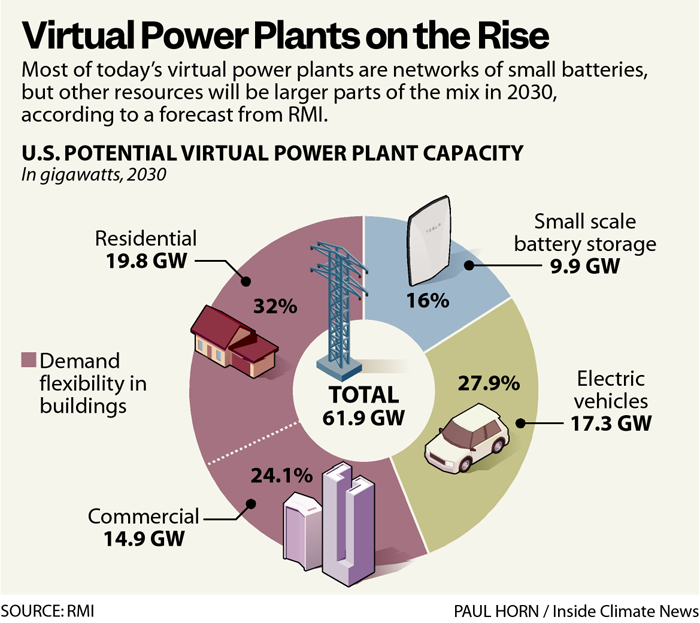
The great thing about adding lots of solar, batteries, EVs, heat pumps, and smart thermostats to the grid (all happening at personal, business, industrial, and grid scale) is that they don’t always need all the power they capture, store, or use, and they’re often connected via software, flaws in the Internet of Things aside.
VPPs are still relatively new, but successful experiments in places like California, progress on utility programs to pay customers for their excess capacity, and new legislation in places like Virginia are all accelerating. With all the constraints and disappeared incentives to put new renewables on the grid, now is the perfect moment for VPPs and the idea of Distributed Energy Resources (DERs) to take a healthy leap forward.
If your utility asks if you want to participate in some sort of VPP program, PLEASE SAY YES. And see what happens.